Houston, TX |
Compression teams do not always have a data problem because information is missing. Sometimes, the data is already there, but it is spread across SCADA systems, vendor portals, telemetry platforms, downtime reports, and spreadsheets.
In our OneView Compression™ webinar, we looked at what can happen when compressor fleet data is available but still difficult to use. Below, we break down the common assumptions discussed in the webinar that can keep operators from seeing the full picture across their gas compressor fleet.
Key Takeaways:
- Compressor data can exist across multiple systems and still leave visibility gaps.
- Mechanical availability alone may not show the full picture of compressor performance.
- Standardized fleet data helps compression teams move faster from awareness to action.
Your Data May Be Missing the Full Fleet View
A fleet of gas compressors can generate a lot of data and still leave teams without a clear view of what is happening across their operations.
That is especially true when runtime, downtime, alarms, vendor updates, and SCADA data live in different systems. Operators may have the information they need, but they still have to move between screens to understand which units need attention and why.
During the webinar, we compared this to a control tower trying to make decisions with too many separate screens. The challenge is not just visibility. It is how quickly teams can move from something changed to someone taking action.
That is where time to awareness, time to dispatch, and time to truth become important. When issues are harder to spot, they tend to last longer than they should.
Your Data May Be Missing a Common Language
Having compressor data is not the same as having data that can be compared across the fleet.
Different vendors, SCADA systems, and telemetry platforms may define events, alarms, measurements, and downtime in different ways. One system may not speak the same language as the next, which makes it harder to understand performance consistently from unit to unit.
In the webinar, we discussed the importance of standardizing data across identity, units and scaling, semantics, and time and events. Once that information is normalized, teams can compare apples to apples across runtime, measurement, downtime, utilization, horsepower utilization, and mechanical availability.
That common language gives operators a clearer starting point. Instead of reconciling data first, teams can spend more time understanding what the data is telling them.
Your Data May Be Missing the Gap Between Availability and Runtime
Mechanical availability is important because it tells teams whether a compressor is available to run, but it does not always tell the full performance story.
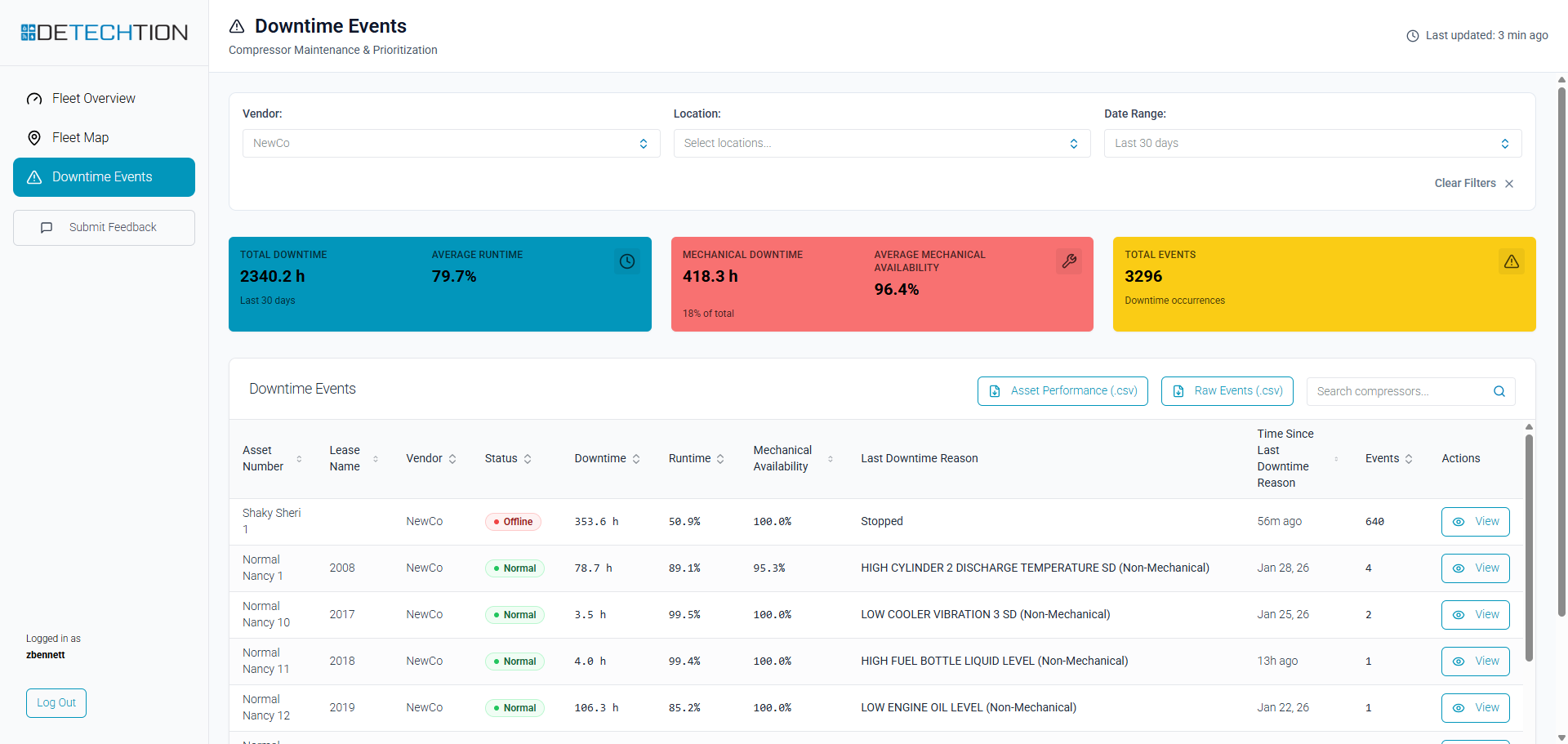
A compressor fleet can show strong mechanical availability and still lose producing time. In some cases, compressor runtime may be lower than expected because of non-mechanical downtime events, even when the unit itself is available.
That gap was one of the key myths we discussed during the webinar. A compressor may look healthy on paper, but the runtime data may tell a different story.
Examples like high jacket water temperature shutdowns or high discharge temperature shutdowns can affect production without showing up as a mechanical availability problem. When teams can see availability and runtime side by side, they have a better chance of finding the issues quietly eating into performance.
Your Data May Be Missing the Time Lost Before Action
The time lost in data workflows often starts before analysis even begins.
Many compression teams still spend hours logging into vendor portals, exporting CSVs, cleaning spreadsheets, organizing columns, and building a snapshot of fleet performance. By the time the data is ready to review, the issue may have already been sitting in the field longer than it should.
In the webinar, we talked about customers pulling downtime information from 10 to 15 different data sources just to understand what was happening across their compressor fleet.
That work still has to happen, but it does not need to slow the team down every time. When compressor data is brought into one standardized view, teams can start closer to insight and action instead of starting with manual data preparation.
Your Data May Be Missing the Utilization Picture
Utilization visibility can also go under the radar, especially across larger fleets.
As noted during the webinar Q&A, utilization is usually the visibility gap we recommend to fix first. Once operators understand how their compressor units are actually being used, they can make better decisions about whether they need more units, spare units, larger units, smaller units, or a different facility design.
That shifts the conversation from what happened to how the fleet should be operated. It also helps connect compressor data to production, revenue, and cost decisions.
For a closer look at these compressor data gaps, watch the full OneView Compression™ webinar below.
Jump to a Topic:
- Why fleetwide compressor visibility matters (4:20)
- How standardized data supports better decisions (7:35)
- How manual data workflows slow teams down (12:25)
- How OneView brings compressor data into one standardized view (13:30)
- Common myths about SCADA, vendor data, and internal dashboards (17:30)
- Why high mechanical availability may still hide runtime loss (25:30)
- Why utilization visibility matters (33:35)
See What Your Compressor Fleet Data Is Missing
Compressor data is most valuable when teams can use it to understand what is happening, why it matters, and where action is needed. When runtime, downtime, utilization, and vendor data are scattered across systems, important performance gaps can stay hidden longer than they should.
At Detechtion, our Compression Optimization Suite of solutions helps operators monitor, optimize, and control gas compression assets with clearer visibility and deeper performance insight. One of those solutions, OneView Compression™, brings compressor data from across vendors and telemetry systems into one standardized view, helping teams move faster from data to action.
Schedule a OneView demo to see how Detechtion can help your team uncover what your compressor fleet data may be missing.