A gas compressor does not have to be shut down or failing to hold back production. In many cases, the bigger issue is that the unit is running, but not fully using the capacity already available to it.
That was one of the clearest takeaways from the second episode of our Know Pressure: Your Guide to Compressor Fleet Management webinar series. In that session, we walked through a real-world case where operating data, utilization metrics, and performance modeling helped uncover an opportunity to improve compressor loading, reduce suction pressure, and increase throughput through a relatively minor configuration change.
For operators, that raises an important question: how do you know when a compressor is underutilized in the first place? Below are five signs that may point to unused capacity and hidden production opportunity.
Key Takeaways:
- Low utilization metrics can be an early sign that a compressor has unused production capacity.
- Configuration details such as pocket position and RPM can quietly limit compressor loading and throughput.
- Comparing operating data against compressor curves and other performance indicators can help confirm underutilization.
1. Horsepower Utilization Stays Well Below Available Load
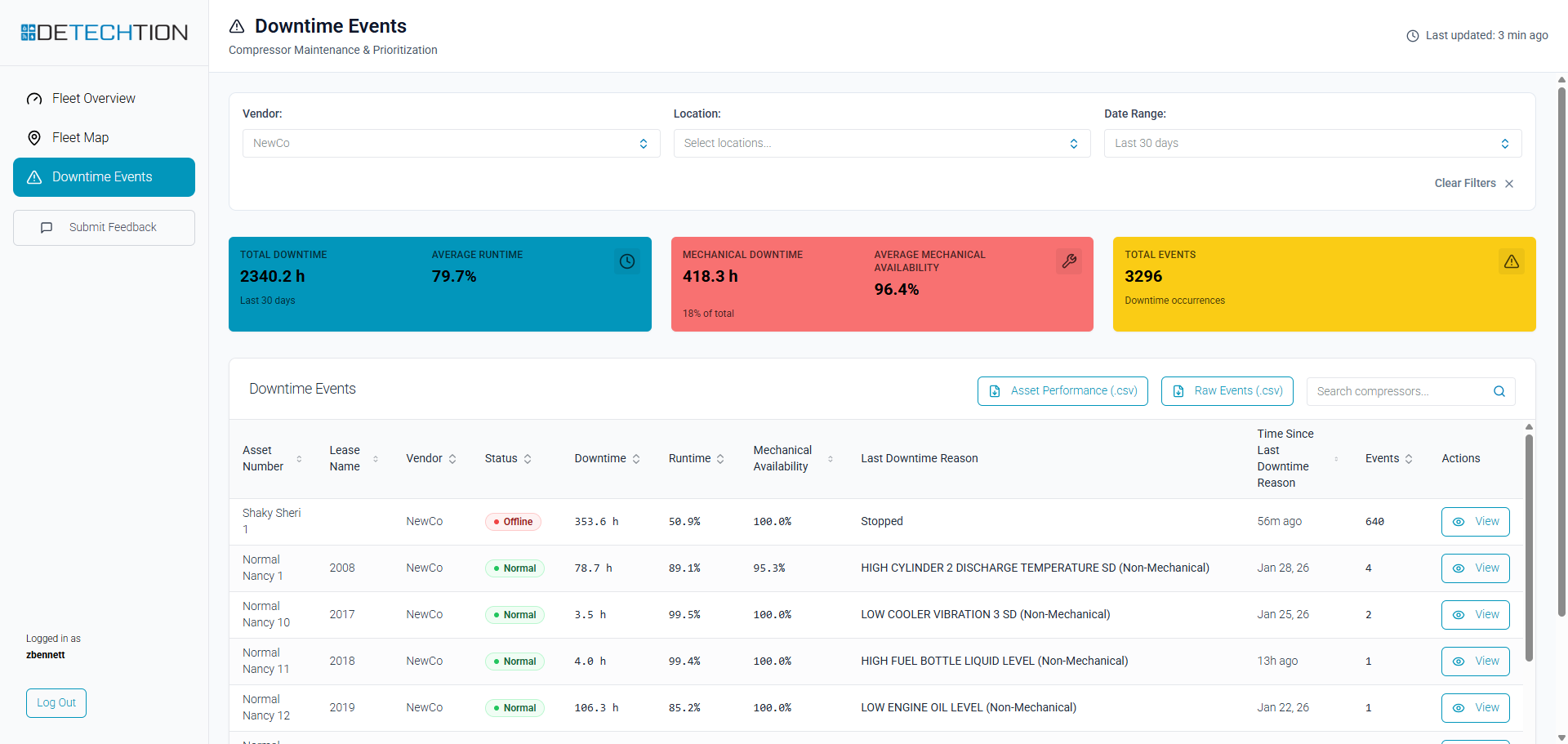
One of the clearest signs of an underutilized compressor is low driver utilization, or how much of the driver’s available power the unit is actually using. When a unit is consistently using well below its available horsepower, it may have unused capacity that is worth evaluating.
That does not mean every lightly loaded compressor should automatically be pushed harder. But it does mean operators should take a closer look. A compressor can run day after day without obvious issues and still limit throughput if it is not fully using the horsepower available to it.
At Detechtion, we recommend looking at power utilization alongside other operating data to help determine whether the unit is lightly loaded for a valid reason or whether there is an opportunity to improve performance. In one case we reviewed, average power utilization was only about 70%, which helped flag the asset as a strong candidate for further evaluation.
2. Cylinder Capacity Utilization Is Much Lower Than It Should Be
Low cylinder capacity utilization is another strong indicator that a compressor may not be making full use of its available compression capacity. This is one of the most useful metrics for moving beyond the simple question of whether a machine is running and toward a better understanding of how effectively it is loaded.
In practice, cylinder utilization is influenced by configuration and operating conditions. A unit will only reach full cylinder utilization when it is running at maximum RPM and the pockets are fully closed.
If utilization remains low, it is worth asking why the compressor is configured that way and whether those settings still make sense for current operating needs. In the case study we discussed, cylinder capacity utilization averaged about 55%, making it clear that the unit had room to improve.
3. Pocket Settings Are Reducing Volumetric Efficiency
Pocket position can have a direct impact on how much gas a compressor is able to move. Compressor pockets are adjustable clearance devices used to increase or decrease cylinder capacity.
When pockets are open, they increase clearance volume inside the cylinder. That means it takes longer for pressure in the chamber to decompress enough for the suction valve to open, leaving less of the intake stroke available to draw in fresh gas. The result is lower volumetric efficiency, meaning the cylinder draws in less fresh gas on each intake stroke.
This is one of the reasons configuration matters so much. A compressor may appear to be operating normally while pocket settings are quietly reducing capacity. In the case we reviewed, the first-stage pockets were open, which contributed to lower cylinder capacity utilization. Closing those pockets increased the cylinder’s appetite and helped improve loading on the unit.
4. The Compressor Is Operating Below Its Curve
Another strong sign of underutilization is when the compressor’s operating point falls below its capacity curve, which shows what the unit should be capable of at a given set of conditions. This is one of the clearest ways to confirm that the asset may be capable of doing more under the current conditions.
Looking at raw flow data alone does not always tell the full story. But when we compare actual suction pressure and flow against the compressor’s curve, we can see whether the unit is operating where it should be or whether there is unused capacity available. In the case study, plotting the operating point against the curve confirmed that the compressor was underutilized and helped frame the possible upside of a configuration change.
5. Valve Behavior or Suction Conditions Suggest the Unit Is Being Held Back
Certain operating patterns can also point to underutilization. Suction control valves that remain partially closed, bypass valves that remain open, or units that generally run at low utilization levels can all suggest that the compressor is being held back by controls or configuration rather than by a hard equipment limit.
Underutilization is not always about what a compressor is failing to do today. Often, it is about what the unit could do if controls, configuration, and loading were better aligned with the needs of the field. In the case we reviewed, evaluating the new configuration showed that the compressor could either move the same volume at a lower suction pressure or move more gas at roughly the same suction pressure, depending on field response.
Underutilization Often Looks Normal Until You Measure It
Underutilized compressors do not always appear to be a problem at first glance. Daily operating data may show pressures, temperatures, and power draw, but that alone does not tell you why a compressor is underperforming, what may be holding it back, or whether there is an opportunity to improve production.
At Detechtion, we use metrics such as power utilization, cylinder capacity utilization, curve position, and configuration details to turn raw operating data into actionable insight. That is what helps operations teams move from simply seeing what the compressor is doing to understanding what it could be doing better.
In the case we reviewed during the webinar, that process helped uncover an opportunity to improve utilization, reduce suction pressure, and increase throughput through a safe configuration change.
If you missed the live session, you can watch on-demand here:
Jump to a Topic:
- The optimization lifecycle for increasing compressor production (2:20)
- What compressor operating data should be collected (8:45)
- Why raw data alone does not reveal every opportunity (9:40)
- How to identify an underutilized compressor (10:45)
- How pocket settings affect compressor capacity (12:30)
- How compressor curves help confirm underutilization (16:10)
- How simulation helps evaluate configuration changes (17:40)
- What it takes to implement a new configuration safely (20:45)
- Results from a real-world optimization case study (23:00)
- Key takeaways for finding underutilized compressors in your fleet (24:05)
Looking for a Hidden Production Opportunity?
A compressor does not have to be offline to hold back production. In many cases, the bigger issue is that the unit is running, but not fully using the capacity already available to it. That is why better visibility into utilization, loading, and configuration matters.
At Detechtion, we help operators use compressor data to find opportunities that may otherwise go unnoticed. Our Compression Optimization Suite supports better visibility, performance analysis, and more informed operating decisions across your fleet of compressors.
For a broader look at how compressor data and technology can help increase production, read Chapter 2 of our Complete Guide to Compressor Fleet Management.