A compressor does not have to be shut down or obviously underperforming to waste power.
In many cases, the bigger issue is that the unit is doing more compression work than the process actually needs. Gas is compressed, bypassed, and recompressed again, increasing electricity or fuel costs without improving the result.
That was one of the clearest takeaways from the third episode of our Know Pressure: Your Guide to Compressor Fleet Management webinar series. In that session, we looked at how a few easy-to-miss operating signals can point to hidden power savings opportunities, including four of the clearest signs a compressor unit may be wasting power.
Key Takeaways:
- A bypass valve that stays open can be an early sign that a compressor is doing more work than the process requires.
- Comparing gas volumes across stages can help reveal unnecessary recompression and wasted power.
- Raw operating data is a starting point, but performance analysis is often needed to confirm a compressor power savings opportunity.
1. Start With a Bypass Valve That Stays Open
One of the clearest signs of a hidden power savings opportunity is gas bypass through a valve that stays open.
That does not automatically mean there is a major opportunity, but it should raise a question: Is the unit compressing more gas than the process actually needs?
In the webinar case study, reported bypass was the first sign that something was going on. It suggested the unit might be moving more gas than necessary and that some of that gas was being recycled rather than moved forward through the process.
This is one of the simplest places to start. A compressor can still be running normally, and meeting process needs while using more power than necessary in the background.
2. Compare Gas Volumes Across the Process
The next step is to compare reported gas volumes and look for a mismatch.
In the case study during the webinar, the sales meter showed about 8 million cubic feet, which aligned with the first-stage flow. But the second-stage flow was closer to 14 million cubic feet. That discrepancy led to a closer review of the process and helped explain what was happening.
The asset had a deethanizer between the first and second stages. It was passing 14 million cubic feet to the second stage, even though only 8 million cubic feet was being sold. That meant about 6 million cubic feet had to be bypassed across the second stage and recycled.
By taking a closer look, we found that the unit was not simply running inefficiently in a general sense. Instead, it was doing extra compression work on gas that didn’t need to be compressed that way.
3. Evaluate a More Efficient Compressor Configuration
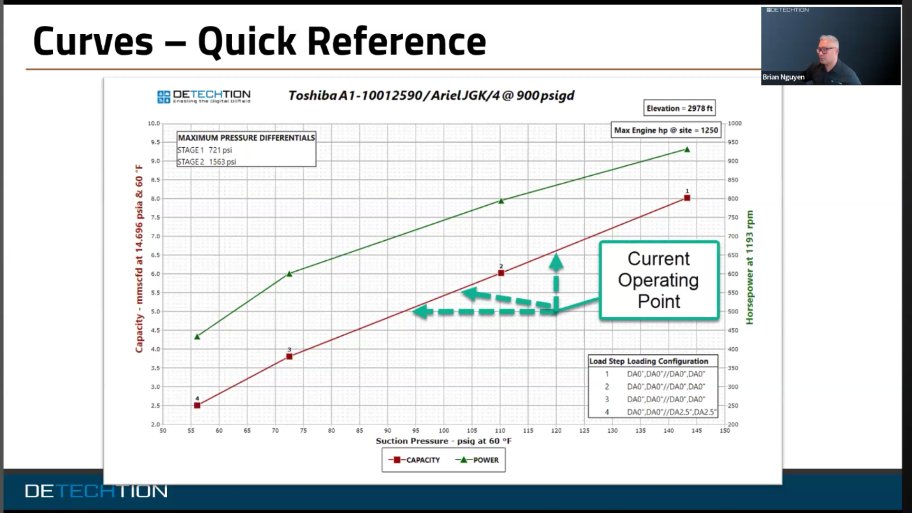
Once the opportunity is identified, the next question is whether the compressor unit can move the desired gas volume at the same or lower suction pressure with a different configuration. That is the progression the webinar followed after identifying the bypass and flow discrepancy.
In this case, performance curves and simulation were used to evaluate different options for reducing the amount of bypass gas on the second stage. The analysis showed that the unit could be reconfigured to reduce unnecessary recompression while still maintaining the required process pressure.
The projected electricity consumption dropped from about 23,000 kilowatt-hours to 18,000 kilowatt-hours, showing that the unit could be configured to better match what the process actually required while using less power.
4. Look Beyond Bypass for Other Sources of Power Waste
Bypass is one of the clearest places to start, but it is not the only place where wasted power can hide. The webinar also pointed to other sources of energy savings, including:
- Running more units in parallel at the plant than the process actually requires
- High interstage pressure drops that increase the work required across the cylinder
- Cylinder blowby that increases power consumption when gas is being recompressed due to slippage or restriction
- Over- or under-compression in screw compressors that creates the same kind of unnecessary work
The broader point is that opportunities for power savings are often already present in the way a compressor or plant is operating today. The challenge is identifying them clearly enough to act on them.
Power Waste Often Looks Normal Until You Measure It
Hidden power savings opportunities do not always stand out at first glance. Daily operating data may show speed, flow, setpoints, and suction and discharge conditions, but that alone does not explain whether the compressor is using more power than it should, what may be driving that extra work, or whether the unit could be configured more efficiently.
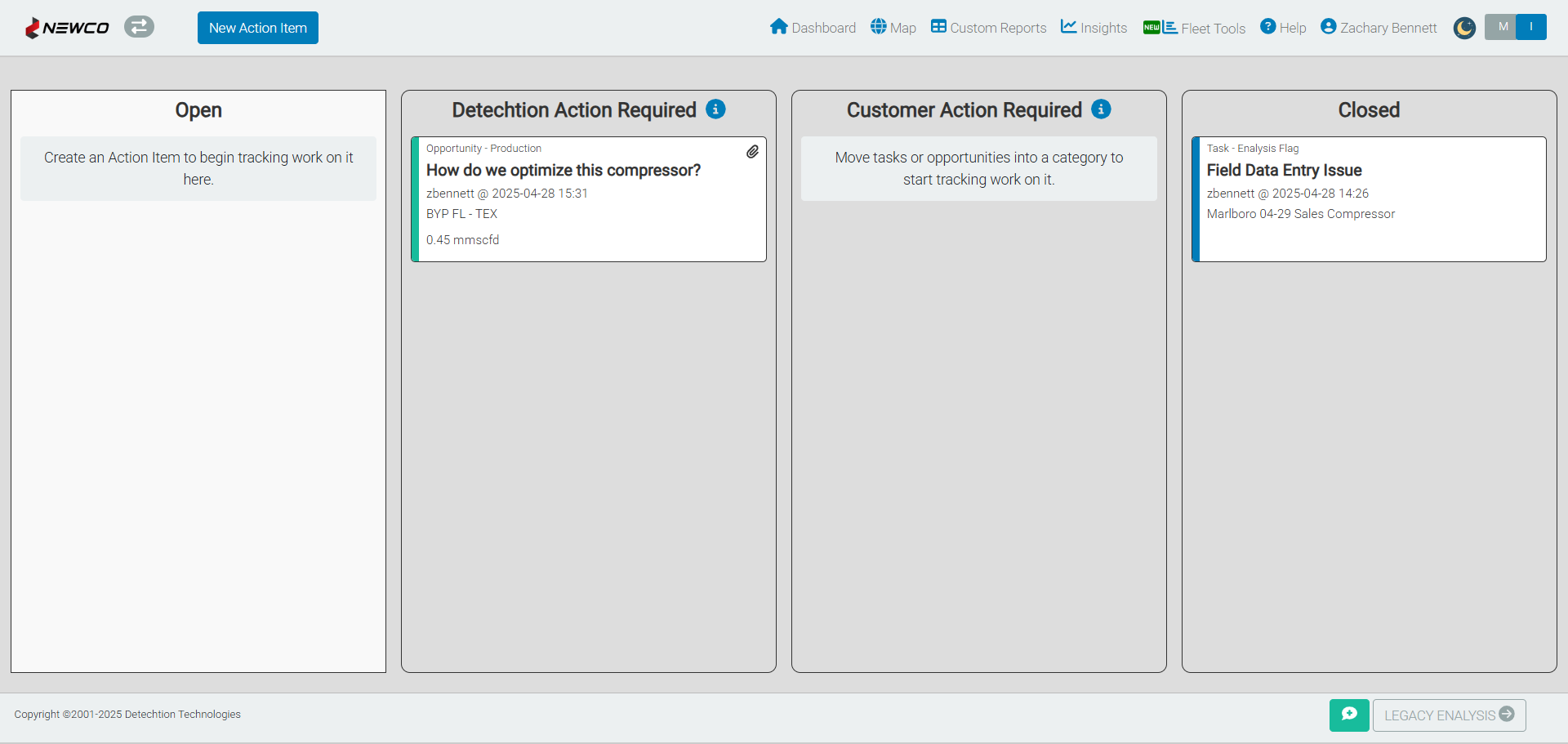
In the webinar case study, the site did not have a high level of automation. Data was collected manually using a data sheet, then entered for analysis. Even with that data, the first review did not immediately reveal the full issue. The clear signal was that bypass was reported open, which indicated the unit needed a deeper look.
At Detechtion, we use operating data, performance metrics, curves, and simulation to turn that kind of raw field data into actionable insight. In the case reviewed during the webinar, that process helped uncover an opportunity to reduce unnecessary recompression and lower annual electrical costs through a safe configuration change.
If you missed the live session, you can watch on-demand here:
Jump to a Topic:
- The optimization lifecycle for reducing power consumption (3:00)
- What operating data was collected in the case study (5:20)
- Why bypass and gas flow mismatch signaled a power savings opportunity (8:45)
- How performance curves and simulation were used (11:05)
- What it took to implement the configuration change safely (16:35)
- Results from the power savings case study (17:30)
- Other places to look for compressor energy savings (20:00)
How to Turn Compressor Data Into Power Savings
A compressor does not have to shut down to create a power savings opportunity. In many cases, the bigger issue is that the unit is still running, still moving gas, and still maintaining the process while doing more work than necessary.
At Detechtion, we help operators use compressor data, performance analysis, and simulation to identify those opportunities and evaluate safe changes that improve efficiency. Our Compression Optimization Suite supports better visibility, performance analysis, and more informed operating decisions across your fleet of compressors.
For a broader look at how operators can reduce energy costs while improving compressor efficiency, read Chapter 3 of our Complete Guide to Compressor Fleet Management.